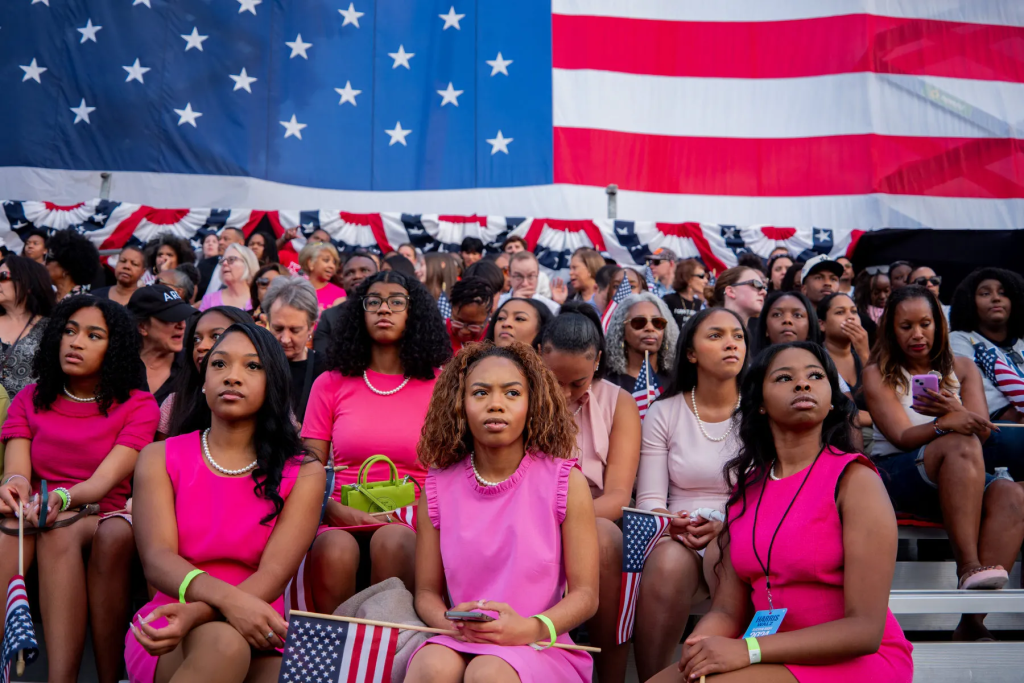
Black women are rejecting narratives that suggest their lack of visibility since November 5 translates into inaction.
This column first appeared in The Amendment, a biweekly newsletter by Errin Haines, The 19th’s editor-at-large. Subscribe today to get early access to her analysis.
Where are the 92 percent?
That has been a persistent question since the presidential election, referring to the Black women who overwhelmingly organized and voted for Kamala Harris and then seemingly went dark after November 5. For many of them — who have largely rejected Donald Trump in his three campaigns for president — Harris’ loss felt like a betrayal, and another signal of disrespect from a democracy they have long worked hard to shape.
In the early days of the Trump administration, there have been feelings of anger, resolve, resignation and exhaustion among Black women and many other Americans frustrated with the president’s actions and the current political climate. Earlier this month, millions of protesters took to the streets in cities across the country to make their voices heard as Trump and ally Elon Musk have sought to dramatically remake the federal government, with consequences for real Americans.
The crowds were overwhelmingly White, not the typical makeup of other recent protest movements. Many of the Black women who have been among the leaders of such movements in the past decade, were noticeably — and intentionally — absent.
The Black women I talk to said they are being strategic, pragmatic and creative about what their resistance looks like now, preparing for a long fight ahead, and rejecting narratives that suggest their lack of visibility in this moment translates into inaction.
“People are paying more attention to what Black women are doing because of the impact we had in the election,” said Janai Nelson, president of the NAACP Legal Defense Fund. “We pointed people in the right direction and they did not follow. We may be out of sight to some people, but we’re not checked out by any stretch. The crisis in America is certainly not out of our minds.”
Within weeks of the election, a meme began to circulate of a group of Black women sitting on the roof of a building, sipping their beverages and watching the country burn. The message: Black women would do nothing to help if the democracy they’d tried to save went up in flames.
This month, another image quickly gained traction during the “Hands Off” protests: a photograph of White marchers filing past a restaurant while Black people having brunch looked on, unbothered.
While the idea that Black women deserve rest is showing up in organic social media content, it’s also part of a campaign of misinformation, said Esosa Osa, founder of Onyx Impact, a nonprofit dedicated to researching Black online communities and fighting harmful information that targets Black voters. Emphasizing Black women talking about rest can discourage others in this key Democratic voting bloc from engaging civically.